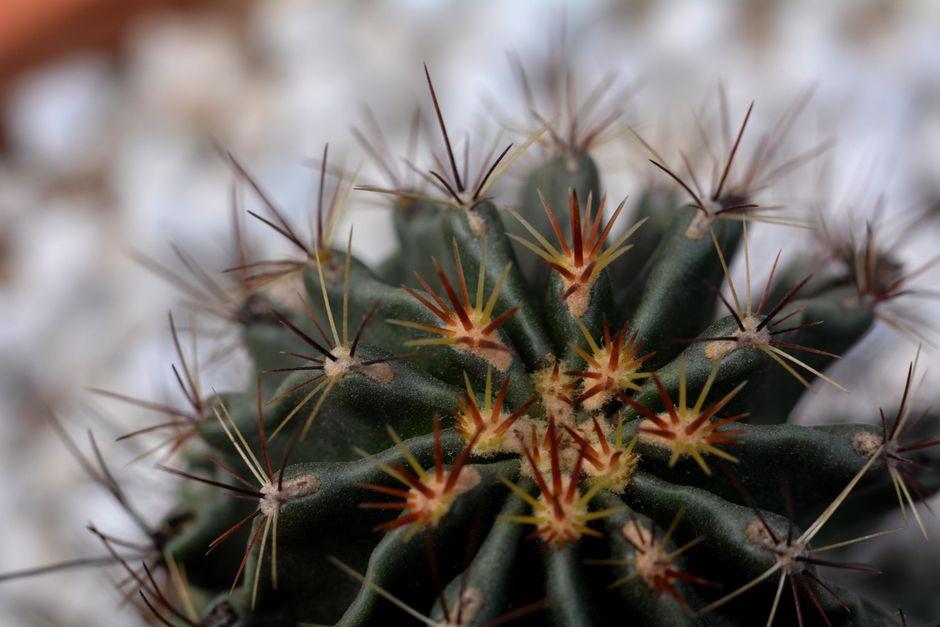
Photo by AMOL NAKVE on Pexels
Lobivia arachnacantha Care Guide: Light, Watering, Soil & Essential Tips
Lobivia arachnacantha
🌍 Distribution
4 countries
Overview
Lobivia arachnacantha, a captivating member of the Cactaceae family, is a small, globular cactus native to the high altitudes of Bolivia. Its name, "arachnacantha," derives from the Greek words "arachne" (spider) and "akantha" (thorn), a fitting description for its most distinctive feature: dense, often intricate, spiderweb-like spines that can completely obscure the green body of the plant. These spines, which vary in color from white to yellow, brown, or even reddish hues, are typically soft and somewhat flexible, contrasting with the often rigid spines of other cacti. The plant usually grows as a solitary globe, though mature specimens may produce offsets, forming small clusters over time.
Beyond its unique spination, Lobivia arachnacantha is highly prized for its spectacular, often brightly colored flowers. These diurnal blooms typically emerge from the crown of the plant in spring and summer, displaying a vibrant palette of yellows, oranges, reds, and sometimes even purplish tones. The flowers are relatively large in proportion to the plant's body, creating a stunning visual display that lasts for several days. This combination of unusual texture and vivid floral beauty makes Lobivia arachnacantha a beloved specimen among cactus enthusiasts and a striking addition to any collection.
Originating from rocky, arid to semi-arid mountainous regions, Lobivia arachnacantha has adapted to harsh conditions, including intense sunlight, cool nights, and periods of drought. Its compact size and relatively undemanding nature make it an excellent choice for both beginner and experienced growers. For beginners, it offers a forgiving introduction to cactus care, rewarding consistent attention with its unique aesthetic and impressive blooms. Experienced collectors appreciate its distinctiveness and the challenge of coaxing out its best coloration and flowering potential. It suits attentive growers who can observe its seasonal needs and appreciate its intricate details. While generally low-maintenance, it thrives under consistent, thoughtful care, particularly regarding its watering schedule and light exposure.
Light Requirements
Lobivia arachnacantha thrives in abundant light, mimicking its natural high-altitude habitat where it receives intense sunlight. The ideal conditions involve full sun to very bright indirect light for at least 6-8 hours daily during its active growing season in spring and summer. Strong light is crucial not only for maintaining its compact, healthy growth and vibrant spine coloration but also for stimulating the production of its magnificent flowers. Without adequate light, the plant will struggle to bloom, and its overall vigor will decline.
Signs of too much light or direct, unacclimated sun exposure can manifest as sunburn. This typically appears as reddish or purplish discoloration on the plant's body, bleaching of the green epidermis, or in severe cases, permanent scarring and hardening of the tissue. If the plant is moved from a lower light environment directly into intense sun, it should be gradually acclimated over several weeks to prevent damage. Young plants or those recently repotted are particularly susceptible to sunburn.
Conversely, too little light will lead to etiolation, a condition where the plant stretches and elongates in an attempt to find more light. Etiolated growth is typically pale green, weak, and narrower than the healthy, compact growth. The spines may also be sparse and poorly developed. A lack of sufficient light will also severely inhibit flowering, as the plant lacks the energy reserves to produce blooms. Over time, prolonged low light conditions can weaken the plant, making it more susceptible to pests and diseases.
For window placement tips, a south-facing window (in the Northern Hemisphere) or a north-facing window (in the Southern Hemisphere) is generally ideal, providing the most direct and prolonged sun exposure. East- or west-facing windows can also work, but growers should monitor for intense afternoon sun that might cause scorching, especially during peak summer months, and consider a sheer curtain or moving the plant slightly back from the window during the hottest parts of the day. If natural light is insufficient, supplemental grow lights, particularly full-spectrum LED lights, can be highly beneficial. Growers should position grow lights approximately 15-30 cm (6-12 inches) above the plant, ensuring consistent light exposure for 12-14 hours per day during the growing season. Rotating the plant periodically will help ensure even growth and light distribution.
Watering Guide
Proper watering is arguably the most critical aspect of caring for Lobivia arachnacantha, as with most cacti. These plants are adapted to periods of intense rainfall followed by prolonged drought, and their care should reflect this natural cycle. The core principle is to water thoroughly and deeply during the active growing season (spring and summer) and then allow the soil to dry out completely before watering again. During dormancy (fall and winter), watering should be drastically reduced or ceased entirely.
Frequency during the growing season typically ranges from once every 2-4 weeks, depending on environmental factors such as temperature, humidity, and pot material. Growers should always check the soil moisture before watering; the top several centimeters of soil, and ideally the entire pot, should feel completely dry to the touch. A moisture meter can be helpful, but often simply lifting the pot to gauge its weight (a dry pot is significantly lighter) or inserting a finger deep into the soil provides sufficient indication.
Regarding method, both top and bottom watering have their merits. Top watering involves pouring water slowly over the soil surface until it drains freely from the pot's drainage holes. This method helps flush out accumulated salts. Care should be taken to avoid getting water directly on the plant body, especially in cooler conditions or if the water is very cold, as this can encourage fungal issues or spotting. Bottom watering involves placing the pot in a tray or saucer of water, allowing the soil to absorb moisture from the bottom up. This method encourages deeper root growth and ensures thorough saturation. The pot should remain in the water for 15-30 minutes, or until the topsoil appears moist, then removed to drain completely. Regardless of the method, ensuring excellent drainage is paramount.
Signs of overwatering are often subtle initially but can quickly become fatal. The most common symptom is root rot, which manifests as a mushy, soft base, often accompanied by discoloration (yellowing or browning) and a foul odor. The plant may also appear to wilt or collapse even though it is saturated with water. Overwatering is the leading cause of death for cacti.
Signs of underwatering include the plant body appearing shriveled, wrinkled, or deflated. The growth may be stunted, and the spines might appear dry and brittle. While underwatering is less immediately detrimental than overwatering for cacti, prolonged drought can weaken the plant and prevent it from flowering or growing optimally. A well-hydrated Lobivia arachnacantha will feel firm and plump.
Seasonal adjustments are crucial. In spring and summer (active growth), water thoroughly when the soil is completely dry. As fall approaches, gradually reduce watering frequency. During winter dormancy, most Lobivia arachnacantha plants require very little to no water. A light misting once a month or a minimal sip of water every 6-8 weeks might be acceptable in very dry indoor environments, but many growers cease watering entirely for 2-3 months to encourage a robust flowering cycle in the spring. Ensuring cool, dry conditions during dormancy is essential for the plant's health and future blooms.
Soil & Potting
The right soil and pot are fundamental to the health and longevity of Lobivia arachnacantha, primarily because they dictate drainage and aeration, which are critical for preventing root rot.
The ideal soil mix for Lobivia arachnacantha must be extremely well-draining and porous. Standard potting soil is too dense and retains too much moisture, leading to inevitable problems. A high-quality commercial cactus and succulent mix can serve as a base, but it almost always needs to be amended with additional inorganic materials to improve drainage further. A good general ratio is 50-70% inorganic materials to 30-50% organic material. Suitable inorganic amendments include perlite, pumice, coarse sand (horticultural grade, not play sand), and fine gravel or grit. Organic components can include a small amount of coco coir or peat moss (though peat can become hydrophobic when dry), but the emphasis should be on materials that allow water to pass through quickly. A common and effective mix might be equal parts cactus potting mix, perlite/pumice, and coarse sand. This blend ensures excellent aeration for the roots and prevents waterlogging.
Drainage requirements are non-negotiable. Any pot chosen for Lobivia arachnacantha must have at least one large drainage hole at the bottom. Without proper drainage, excess water will sit in the pot, suffocating the roots and promoting the growth of harmful fungi and bacteria that cause root rot. Placing a layer of gravel or pot shards at the bottom of the pot (known as a "drainage layer") is a common but often misguided practice; it does not improve drainage and can actually create a "perched water table" effect, increasing the risk of root rot by holding water higher in the pot. The best approach is simply to use a well-draining soil mix in a pot with drainage holes.
For pot material recommendations, terracotta or unglazed clay pots are highly recommended. These materials are porous, allowing for excellent airflow to the roots and facilitating the evaporation of excess moisture from the sides of the pot. This helps the soil dry out more quickly and reduces the risk of overwatering. Plastic pots can also be used, but they retain moisture for longer periods, requiring more vigilant watering practices. If using plastic, ensure it has ample drainage holes. Glazed ceramic pots also retain more moisture and offer less breathability than terracotta.
The pot size guide for Lobivia arachnacantha should focus on providing just enough space for the root system without being excessively large. A pot that is too large for the plant's root ball will hold too much soil, which in turn retains too much moisture, increasing the risk of root rot. Generally, a pot that is only slightly larger than the plant's current root ball, typically about 2.5-5 cm (1-2 inches) wider than the plant's diameter, is appropriate. Lobivia arachnacantha often develops a taproot, so a pot with reasonable depth is beneficial. Repotting is typically needed every 2-3 years, or when the plant has visibly outgrown its container, usually in the spring before the active growing season begins. When repotting, gently remove old soil, inspect roots for health, and replant in fresh, well-draining mix.
Temperature & Humidity
Lobivia arachnacantha, originating from the high-altitude regions of Bolivia, is adapted to a range of temperatures and generally prefers low humidity. Understanding these environmental preferences is key to successful cultivation and encouraging robust growth and flowering.
During the active growing season (spring and summer), the ideal temperature range for Lobivia arachnacantha is warm, typically between 20-35°C (68-95°F). During this period, the plant actively grows, produces new spines, and forms flowers. It can tolerate even higher temperatures, provided there is good air circulation and adequate, but not excessive, watering. Nighttime temperatures during the growing season can drop slightly, mimicking its natural habitat, but generally should remain above 15°C (59°F) for optimal growth.
Seasonal considerations are vital for inducing flowering. To encourage a prolific bloom cycle, Lobivia arachnacantha benefits from a distinct cool, dry dormancy period during fall and winter. During this time, ideal temperatures range from 5-15°C (41-59°F). Exposure to cooler temperatures, coupled with significantly reduced or no watering, signals to the plant that winter has arrived, allowing it to rest and store energy for spring flowering. It is crucial to protect the plant from frost, as temperatures below 0°C (32°F) can cause irreversible damage and even death. If grown outdoors, plants should be brought indoors or provided with frost protection when temperatures threaten to drop too low.
Regarding humidity, Lobivia arachnacantha prefers low humidity environments, typically in the range of 30-50%. Its natural habitat is often dry, and high humidity, especially when combined with cool temperatures or poor air circulation, can be detrimental. High humidity increases the risk of fungal diseases, rot, and pest infestations. Therefore, there is generally no need to boost humidity for this plant. In fact, efforts should be made to ensure good air circulation, particularly in enclosed spaces or during periods of high ambient humidity, to prevent moisture from lingering around the plant's body and soil surface. Adequate ventilation is more important than attempting to modify humidity levels for this species. If the growing environment is excessively humid, using a fan to circulate air can be beneficial.
Fertilizing
Fertilizing Lobivia arachnacantha can provide essential nutrients to support healthy growth and robust flowering, but it must be done judiciously and only during the plant's active growing season. Over-fertilization can be more detrimental than under-fertilization for cacti.
The type of fertilizer is crucial. Lobivia arachnacantha, like most cacti, prefers a fertilizer that is low in nitrogen (N) and higher in phosphorus (P) and potassium (K). Nitrogen promotes lush vegetative growth, which can be undesirable for cacti as it can lead to soft, elongated growth and a reduction in flowering. Phosphorus is vital for root development and flower production, while potassium contributes to overall plant health, disease resistance, and spine development. A balanced fertilizer specifically formulated for cacti and succulents, often with an N-P-K ratio like 5-10-10, 2-7-7, or similar low-nitrogen formulations, is ideal. Many growers choose to dilute the recommended strength to half or even a quarter to avoid nutrient burn.
Frequency of fertilization should be limited to the active growing season, which typically spans from spring through late summer. During this period, growers can apply fertilizer every 4-6 weeks. It is generally best to apply fertilizer to moist soil, rather than bone-dry soil, to prevent root burn. Watering the plant a day or two before fertilizing can help.
Distinguishing between the growing season vs. dormancy is essential for proper fertilization. During the active growing season (spring and summer), when the plant is actively putting on new growth and preparing to flower, fertilization can be beneficial. This is when the plant is utilizing nutrients most efficiently. However, as fall approaches and temperatures begin to drop, the plant naturally enters a period of dormancy. During dormancy (fall and winter), Lobivia arachnacantha should not be fertilized at all. Applying fertilizer during dormancy can stress the plant, lead to nutrient buildup in the soil, and potentially damage the roots, as the plant is not actively growing or absorbing nutrients. Ceasing fertilization entirely during the cooler, drier months helps the plant rest and prepare for the next growing and flowering cycle.
Common Problems
Despite being relatively hardy, Lobivia arachnacantha can encounter a few common issues, primarily stemming from improper environmental conditions or pest infestations. Vigilance and prompt action are key to resolving these problems.
1. Root Rot
- Symptoms: The most common and often fatal issue. Symptoms include a soft, mushy base or lower portion of the plant, often accompanied by discoloration (yellowing, browning, or blackening) and a foul, earthy odor. The plant may appear to wilt or collapse despite the soil being wet. Growth will cease, and the plant may eventually turn completely to mush.
- Causes: Almost always caused by overwatering, especially when combined with poor drainage, heavy soil mixes, or cool temperatures. Waterlogged soil deprives roots of oxygen, creating an anaerobic environment conducive to fungal and bacterial pathogens.
- Solutions: If caught early, the plant can sometimes be saved. Carefully unpot the plant and inspect the roots. Trim away all affected, mushy, or discolored roots using a sterile knife or shears until only healthy, firm, white root tissue remains. Allow the plant to air dry in a cool, shaded area for several days to a week, allowing the cut surfaces to callous over. Repot into fresh, extremely well-draining cactus mix and a clean pot, and refrain from watering for at least a week or two to allow the plant to re-establish. Re-evaluate watering frequency and soil mix.
2. Etiolation (Stretching)
- Symptoms: New growth appears stretched, elongated, pale green, and significantly narrower than the older, healthy growth. Spines on the new growth may be sparse, weak, or poorly formed. The plant loses its characteristic compact, globular shape.
- Causes: Insufficient light is the sole cause of etiolation. Lobivia arachnacantha requires abundant bright light to maintain its compact form and produce energy for growth and flowering.
- Solutions: Move the plant to a brighter location with more direct sunlight, gradually acclimating it over a week or two to prevent sunburn. If natural light is inadequate, supplement with a full-spectrum grow light. Etiolated growth will not revert to its original compact form, but subsequent new growth will be healthy if light conditions are corrected. Severely etiolated sections can be pruned off if desired, and the healthy, compact base will continue to grow correctly.
3. Spider Mites
- Symptoms: Tiny, pinprick-sized yellow or brown spots on the plant's surface, particularly between ribs or in crevices. Fine, delicate webbing may be visible, especially on new growth or around the base of spines. In severe infestations, the plant may appear dull, dusty, or discolored, and growth can be stunted. These pests are barely visible to the naked eye.
- Causes: Dry, warm, and stagnant air conditions often favor spider mite proliferation. They can also be introduced from new plants.
- Solutions: Isolate the affected plant immediately. For mild infestations, a strong spray of water can dislodge them. For more severe cases, apply insecticidal soap or neem oil, ensuring thorough coverage of all plant surfaces, including crevices. Repeat treatment every 5-7 days for several weeks to break their life cycle. Improving air circulation can help prevent future infestations.
4. Mealybugs
- Symptoms: Small, white, cottony masses appearing in crevices, at the base of spines, or on the plant body. These masses are the insects themselves, often surrounded by a sticky, clear substance called honeydew. Honeydew can also lead to the growth of sooty mold. Affected plants may show stunted growth, yellowing, or general decline.
- Causes: Mealybugs can be introduced on new plants, through contaminated tools, or via other plants in the collection. Poor air circulation and overwatering can sometimes exacerbate infestations.
- Solutions: Isolate the infected plant. For small infestations, dab each mealybug directly with a cotton swab dipped in rubbing alcohol (isopropyl alcohol 70%). For larger infestations, thoroughly spray the plant with insecticidal soap or a diluted neem oil solution, ensuring it reaches all nooks and crannies. Repeat treatments are necessary every 7-10 days for several weeks to eradicate newly hatched nymphs. Systemic insecticides may be used for very persistent or severe cases, following product instructions carefully.
Frequently Asked Questions
Q: How often does Lobivia arachnacantha bloom?
A: Lobivia arachnacantha typically blooms once a year, usually in spring or early summer, provided it receives adequate light, proper watering, and experiences a distinct cool, dry dormancy period during winter. Individual flowers last for several days, and a mature plant can produce multiple blooms sequentially over several weeks.
Q: Can Lobivia arachnacantha be grown outdoors?
A: Yes, Lobivia arachnacantha can be grown outdoors in suitable climates that mimic its native Bolivian highlands. This means regions with plenty of sun, low humidity, well-draining soil, and protection from frost, ideally USDA hardiness zones 9-11. In colder climates, it must be brought indoors before temperatures drop below 5°C (41°F).
Q: Why is my Lobivia arachnacantha turning red/purple?
A: A reddish or purplish tint on Lobivia arachnacantha is often a sign of healthy stress, typically caused by intense sunlight or cooler temperatures. This coloration is a natural protective mechanism, similar to a tan, and usually indicates the plant is receiving optimal light exposure. However, if the color change is accompanied by mushiness or shriveling, it could indicate sunburn or other issues.
Q: What is the best way to propagate Lobivia arachnacantha?
A: Lobivia arachnacantha is most commonly propagated from offsets (pups) that grow around the base of mature plants. These offsets can be carefully twisted or cut off, allowed to callous for a few days to a week in a dry, shaded area, and then planted in a well-draining cactus mix where they will root. It can also be propagated from seed, though this is a slower process.