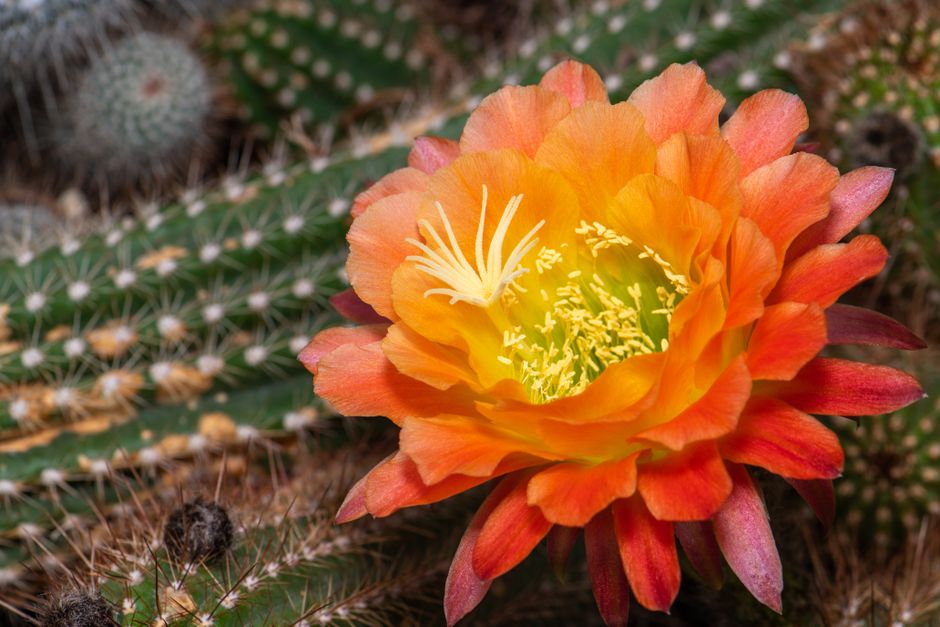
Lobivia calorubra

Photo by Skyler Ewing on Pexels

Lobivia calorubra Care Guide: Light, Watering, Soil & Essential Tips

Lobivia calorubra

🌍 Distribution

2 countries

Overview

Lobivia calorubra, a captivating member of the Cactaceae family, is a small, globose to short-cylindrical cactus renowned for its spectacular and vibrant flowers. Originating from the high-altitude regions of the Andes in South America, particularly in parts of Bolivia and Argentina, this species is well-adapted to harsh, rocky environments. Its name, "calorubra," hints at its striking appearance: "calor" meaning heat or warmth, and "rubra" meaning red, likely referring to the intense, often fiery-red or orange hues of its blooms, though flower colors can also include shades of yellow, pink, and purple. The body of the cactus typically features prominent ribs adorned with short, sharp spines, which vary in color from yellowish to dark brown.

What makes Lobivia calorubra particularly special is the disproportionately large and incredibly beautiful flowers it produces, often appearing in a magnificent crown around the apex of the plant. These blooms are ephemeral, typically lasting only a day or two, but they emerge in succession throughout the spring and summer growing season, creating a breathtaking display. The plant itself remains relatively compact, making it an excellent choice for windowsills, small garden spaces, or rock gardens. Its robust nature and relatively straightforward care requirements contribute to its widespread appeal among cactus enthusiasts.

Growers are drawn to Lobivia calorubra not only for its aesthetic appeal but also for the rewarding experience of nurturing a plant that bursts into such vivid life. Its compact size ensures it does not demand extensive space, and its distinctive form adds architectural interest even when not in flower. This species is generally considered suitable for both beginner and intermediate cactus growers. While it is not overly fussy, it thrives with attentive care, particularly regarding its light and watering needs. For individuals who appreciate dramatic floral displays and are willing to observe their plants for signs of stress or health, Lobivia calorubra offers a rewarding and enjoyable cultivation experience. It suits those who can provide consistent care during the growing season and respect its dormant period.

Light Requirements

Lobivia calorubra thrives in abundant sunlight, mirroring its natural habitat where it is exposed to intense solar radiation. The ideal light condition for this cactus is full sun to bright, indirect light for at least six hours daily. In cultivation, this typically translates to placement in a south-facing window in the Northern Hemisphere, or a north-facing window in the Southern Hemisphere, where it can receive direct morning sun. While it appreciates strong light, intense, unfiltered afternoon sun, especially in hot climates or during peak summer, can sometimes be too harsh and may necessitate some protection or dappled shade to prevent scorching. An east-facing window provides excellent morning sun, which is generally less intense and highly beneficial. A west-facing window can also work, but growers should monitor the plant carefully during the hottest parts of the day.

Signs of too much light often manifest as a reddish or purplish discoloration of the plant's body, which is a natural stress response to protect itself from excessive UV radiation. While a slight reddening can be attractive, extreme red or brown patches, or a bleached appearance, indicate sunburn or scorching. Stunted growth, where the plant appears to shrink or stop growing entirely, can also be a symptom of prolonged exposure to overly intense, unacclimatized light.

Conversely, insufficient light will cause Lobivia calorubra to etiolate, a condition where the plant stretches and grows thin and pale in an attempt to reach for more light. This results in weak, elongated growth that is structurally unsound and detracts from the plant's natural compact form. The ribs may become less defined, and the overall color will appear dull or excessively pale green. A lack of flowering is another clear indicator of inadequate light, as the plant needs ample energy from sunlight to produce its magnificent blooms.

For optimal growth and flowering, growers should aim to provide bright conditions, gradually acclimating the plant to stronger light if it has been in a shadier spot. Rotating the plant periodically can ensure even light exposure and prevent one side from stretching while the other remains compact. During winter dormancy, light requirements are slightly less critical, but providing some light is still beneficial.

Watering Guide

Proper watering is paramount for the health and longevity of Lobivia calorubra, as this species is highly susceptible to issues arising from incorrect moisture levels. The guiding principle for watering this cactus is the "soak and dry" method. This involves thoroughly watering the plant until water drains from the bottom of the pot, and then allowing the soil to dry out completely before watering again.

During its active growing season, which typically spans from spring through late summer (approximately April to September in the Northern Hemisphere), Lobivia calorubra requires more frequent watering. Growers should check the soil moisture every 7-14 days. If the top 2-3 inches (5-7.5 cm) of soil are dry, or if the pot feels significantly lighter, it is time to water. In hot, dry conditions, watering may be needed more frequently, perhaps once a week. In cooler or more humid environments, once every two weeks might suffice.

The preferred watering method is bottom watering, where the pot is placed in a tray of water for 15-30 minutes, allowing the soil to absorb moisture from the drainage holes upwards. This ensures even saturation of the root ball and encourages deeper root growth. If top watering, pour water slowly and evenly over the soil surface until it drains out of the bottom, taking care not to let water pool around the cactus base, which can lead to rot.

Signs of overwatering are distinct and often severe. The most common symptom is root rot, which manifests as a soft, mushy base, often accompanied by discoloration (yellowing, browning, or blackening) and a foul odor. The plant may appear to collapse or become unstable. Overwatering can also lead to fungal infections and pest infestations.

Conversely, underwatering causes the plant to shrivel, wrinkle, or appear deflated. The body of the cactus may feel soft but not mushy, and the spines might become brittle. While Lobivia calorubra is drought-tolerant, prolonged underwatering will stunt its growth and prevent flowering. If underwatered, the plant will slowly rehydrate once properly watered, but severe dehydration can be difficult to reverse.

Seasonal adjustments to watering are crucial. As autumn approaches (September to November), gradually reduce the frequency of watering to prepare the plant for dormancy. By winter (December to February), when temperatures are cool and light levels are low, Lobivia calorubra enters a dormant period and requires very little to no water. Watering during dormancy can almost guarantee root rot. A light misting might be acceptable in extremely dry indoor environments, but generally, the plant should be kept dry through winter. Resume watering sparingly in early spring as temperatures rise and new growth is observed.

Soil & Potting

The success of growing Lobivia calorubra hinges significantly on providing the correct soil and potting conditions that mimic its arid, well-drained natural environment. The ideal soil mix must be extremely porous and fast-draining to prevent waterlogged conditions, which are detrimental to this cactus.

A high-quality cactus and succulent potting mix serves as an excellent base, but it almost always requires amendments to enhance drainage further. A suitable custom mix can be created by combining equal parts of a standard potting mix (or cactus/succulent mix), coarse sand (like horticultural or play sand, not fine builder's sand), perlite, and/or pumice. Gravel or small crushed rocks can also be incorporated. The goal is a gritty, airy substrate that allows water to pass through quickly and dries out efficiently. Avoid heavy, moisture-retentive soils, as these will lead to root rot.

Drainage requirements are non-negotiable. Any pot used for Lobivia calorubra must have drainage holes at the bottom. Without adequate drainage, water will accumulate, creating an anaerobic environment that suffocates roots and promotes fungal growth.

When selecting pot materials, terracotta or unglazed ceramic pots are highly recommended. These materials are porous, allowing air to circulate through the soil and moisture to evaporate from the pot's sides, which aids in faster drying between waterings. Plastic pots can also be used, but they retain moisture for longer periods, so growers must be extra vigilant with their watering schedule to avoid overwatering. Glazed ceramic pots also retain more moisture due to their non-porous nature. Whatever the material, ensure it is sturdy enough to hold the plant and its gritty soil.

Regarding pot size, Lobivia calorubra generally prefers to be slightly root-bound. Choose a pot that is only slightly larger than the plant's current root ball. An overly large pot will hold too much soil, which retains excess moisture for extended periods, increasing the risk of root rot. For mature plants, a pot with a diameter of 4-6 inches (10-15 cm) is often sufficient. Repotting is typically necessary every 2-3 years, or when the plant has visibly outgrown its container, usually in early spring before the active growing season begins. When repotting, always use fresh, well-draining soil mix.

Temperature & Humidity

Lobivia calorubra is a resilient cactus that tolerates a range of temperatures, but it thrives within specific parameters that reflect its high-altitude origins. During its active growing season, from spring through summer, the ideal temperature range is between 18°C and 30°C (65°F and 85°F). It can tolerate higher temperatures, even up to 35°C (95°F), provided there is good air circulation and adequate, but not excessive, watering. Consistent warmth during this period is crucial for robust growth and prolific flowering.

As autumn progresses and temperatures begin to drop, Lobivia calorubra requires a cooler period to enter dormancy. This cool dormancy is essential for promoting future flowering. During winter, the plant prefers temperatures between 5°C and 10°C (40°F and 50°F). It can tolerate brief dips slightly below this, but it is highly sensitive to frost. Exposure to freezing temperatures for extended periods will cause severe damage or death to the plant tissue. Growers in regions with cold winters must bring their Lobivia calorubra indoors or provide frost protection. Conversely, keeping the plant too warm during winter dormancy can disrupt its natural cycle, leading to weak growth and a reluctance to flower in the subsequent season.

Humidity requirements for Lobivia calorubra are quite straightforward: it prefers low humidity. In its natural environment, the air is typically dry, and the plant has evolved to thrive in such conditions. Ideal humidity levels are generally below 50%. High humidity, especially when combined with cool temperatures or poor air circulation, can create an environment conducive to fungal diseases and rot.

There is generally no need to boost humidity for Lobivia calorubra. In fact, efforts to increase humidity, such as misting or placing the plant on a pebble tray with water, are usually counterproductive and can be harmful. These practices can lead to moisture accumulating on the plant's body and between its spines, increasing the risk of rot and fungal infections. Ensuring good air circulation around the plant is far more beneficial than attempting to increase humidity. If growing indoors, avoid placing the plant in naturally humid areas like bathrooms or directly next to humidifiers. Proper ventilation is key to maintaining the dry conditions this cactus prefers.

Fertilizing

Fertilizing Lobivia calorubra is an important aspect of its care, providing essential nutrients to support healthy growth and abundant flowering. However, like many cacti, it is not a heavy feeder and can be sensitive to over-fertilization.

The type of fertilizer recommended for Lobivia calorubra is a specialized cactus or succulent fertilizer. These formulations are typically low in nitrogen (N) and higher in phosphorus (P) and potassium (K). A high phosphorus content (the middle number in the N-P-K ratio) is particularly beneficial as it promotes strong root development and, critically, encourages flowering. A common N-P-K ratio might be something like 5-10-10 or 2-7-7. Avoid fertilizers high in nitrogen, as this can lead to lush, soft growth that is more susceptible to pests and diseases, and may inhibit flowering.

Fertilizer should only be applied during the plant's active growing season, which spans from spring through late summer. The frequency of application should be moderate. A general guideline is to fertilize every 2-4 weeks. It is crucial to dilute the fertilizer to half or even quarter strength of what the manufacturer recommends for other houseplants. Over-fertilization can burn the roots and damage the plant. Always apply fertilizer to moist soil, never to dry soil, as this can cause root burn. Watering the plant thoroughly the day before fertilizing can help prevent this.

As autumn approaches and temperatures begin to drop, gradually reduce the frequency and strength of fertilization. During the plant's winter dormancy (typically from late autumn through early spring), Lobivia calorubra requires no fertilizer whatsoever. Fertilizing a dormant plant can lead to nutrient burn, disrupt its natural cycle, and cause unnecessary stress. The plant uses this dormant period to rest and prepare for the next growing cycle. Resume fertilization in early spring when signs of new growth appear, starting with a very diluted solution. Following these guidelines will ensure your Lobivia calorubra receives the necessary nutrients for vibrant growth and spectacular blooms without the risk of over-fertilization.

Common Problems

Despite being relatively hardy, Lobivia calorubra can encounter a few common problems, primarily related to improper care. Understanding the symptoms, causes, and solutions for these issues can help growers maintain healthy plants.

1. Root Rot

Symptoms: The base of the cactus becomes soft, mushy, and discolored (yellow, brown, or black). The plant may lean, collapse, or appear unstable. A foul odor might emanate from the soil. Causes: Primarily caused by overwatering, especially when combined with poor drainage, heavy soil, or insufficient warmth during dormancy. Excess moisture suffocates roots and promotes fungal or bacterial infections. Solutions: Immediately unpot the plant. Inspect the roots and cut away all soft, mushy, or discolored portions using a sterile knife or razor blade until only healthy, firm tissue remains. Allow the plant to air dry in a cool, shaded place for several days to a week, allowing the cut surfaces to callous over. Repot into fresh, dry, extremely well-draining soil in a clean pot (preferably terracotta) and refrain from watering for at least a week or two, or until new root growth is observed. Adjust watering frequency going forward.

2. Etiolation

Symptoms: The plant appears stretched, elongated, and often pale or yellowish-green. The characteristic compact, globose shape is lost, and new growth is noticeably thinner and weaker than the older growth. Spines may be sparse. Causes: Insufficient light. Lobivia calorubra needs abundant bright light to maintain its compact form. Prolonged periods in low-light conditions force the plant to stretch in search of light. Solutions: Gradually move the plant to a brighter location. Acclimatize it slowly to prevent sunburn. Unfortunately, etiolated growth cannot revert to its original compact form. If the etiolation is severe, the stretched portion can be cut off, and the healthy, compact base can be encouraged to produce new offsets. The etiolated tip can also be rooted as a cutting if it's healthy enough, but it may always retain a somewhat awkward shape.

3. Sunburn / Scorching

Symptoms: Brown, reddish-brown, or black patches appearing on the surface of the cactus, often on the side most exposed to the sun. The affected areas may become dry, hard, or crisp. Causes: Sudden exposure to intense, unfiltered sunlight, especially after a period in lower light conditions. This is common when moving indoor plants outdoors in spring without proper acclimatization, or when temperatures are excessively high. Solutions: Move the plant to a location with slightly filtered or dappled sunlight, or provide some shade during the hottest parts of the day. Sunburned tissue will not recover its original appearance, but the plant can continue to grow around the damaged area. Gradually reintroduce the plant to stronger light over several weeks to allow it to adapt.

4. Pests (Mealybugs & Spider Mites)

Symptoms:

  • Mealybugs: Small, white, cottony masses typically found in crevices, around the base of spines, or on the roots. They suck plant sap, leading to stunted growth, yellowing, and general decline.
  • Spider Mites: Tiny red or brown mites, often difficult to see with the naked eye. Their presence is indicated by fine webbing on the plant, especially between spines and ribs, and a stippled or speckled appearance on the plant's surface due to sap feeding. Causes: Often introduced from new plants, or can appear when plants are stressed or in environments with poor air circulation. Dry, dusty conditions can favor spider mites. Solutions:
  • Mealybugs: For small infestations, dab mealybugs directly with a cotton swab dipped in rubbing alcohol (70% isopropyl alcohol). For larger infestations, spray the plant with insecticidal soap or a diluted neem oil solution. Repeat treatments every 7-10 days until clear.
  • Spider Mites: Increase humidity slightly (briefly misting can help, but avoid prolonged dampness). Spray with insecticidal soap, neem oil, or a strong jet of water to dislodge them. Ensure good air circulation. Isolate infested plants to prevent spread.

Frequently Asked Questions

Q: How often does Lobivia calorubra bloom, and what time of year?

Lobivia calorubra typically blooms repeatedly throughout its active growing season, primarily from late spring to late summer (May to August). Individual flowers are ephemeral, lasting only a day or two, but the plant can produce multiple flushes of blooms in succession, creating a prolonged display.

Q: Can Lobivia calorubra be grown outdoors?

Yes, Lobivia calorubra can be grown outdoors in suitable climates. It thrives in USDA hardiness zones 9-11, where it can be planted in rock gardens or containers. In regions with colder winters (below 5°C or 40°F), it must be brought indoors or provided with significant frost protection.

Q: What kind of dormancy does Lobivia calorubra have?

Lobivia calorubra undergoes a cool, dry dormancy during winter. This period is crucial for the plant's health and future flowering. During dormancy, watering should be stopped or significantly reduced, and temperatures should ideally be kept cool, between 5-10°C (40-50°F), with ample light.

Q: Is Lobivia calorubra toxic to pets?

While Lobivia calorubra is not listed as severely toxic, its sharp spines can cause physical irritation or injury if ingested or handled roughly by curious pets. It is generally advisable to keep all cacti out of reach of pets to prevent harm.

Last updated: March 26, 2026