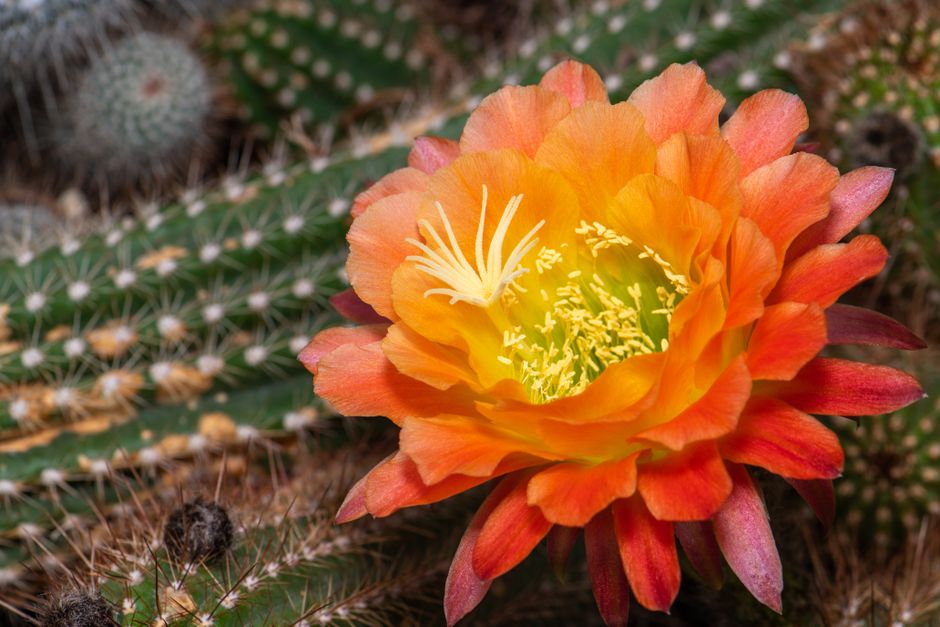
Photo by Skyler Ewing on Pexels
Lobivia cinnabarina Care Guide: Light, Watering, Soil & Essential Tips
Lobivia cinnabarina
🌍 Distribution
5 countries
Overview
Lobivia cinnabarina, a captivating member of the Cactaceae family, is renowned for its striking beauty and relatively straightforward care, making it a beloved choice for cactus enthusiasts. Native to the high-altitude regions of Bolivia and northern Argentina, this species thrives in rocky, mountainous terrains, a testament to its resilience and adaptability. Its name, "cinnabarina," refers to the vibrant cinnabar-red color of its spectacular flowers, which are often large and intensely colored, providing a dramatic contrast against its usually green or glaucous blue-green spherical to somewhat flattened stem.
What makes Lobivia cinnabarina particularly special is its prolific flowering habit. When provided with optimal conditions, it can produce an abundance of showy blooms, often larger than the cactus body itself, in shades ranging from brilliant red and orange to pink and even purple. These flowers typically emerge in spring or early summer, opening during the day and lasting for several days, creating a truly magnificent display. The cactus itself usually forms solitary globose stems, which can eventually offset to create small clumps, adding to its visual appeal. Its ribs are typically well-defined, and its spines, while present, are generally not overly aggressive, contributing to its manageable nature.
Lobivia cinnabarina is particularly well-suited for attentive beginners and intermediate plant enthusiasts. While it is not overly demanding, successful cultivation and, crucially, consistent flowering, require a good understanding of its specific needs, especially regarding light, watering, and a proper dormancy period. Growers who are willing to observe their plant's cues and adjust care seasonally will be richly rewarded. It appeals to those who appreciate the unique beauty of desert flora and the satisfaction of coaxing vibrant blooms from a seemingly unassuming plant. Its compact size also makes it an excellent choice for windowsills, rock gardens in suitable climates, or mixed succulent arrangements.
Light Requirements
Lobivia cinnabarina is a sun-loving cactus that thrives in bright, intense light conditions, mimicking its natural habitat. For optimal growth, robust health, and prolific flowering, the plant requires at least 4-6 hours of direct sunlight daily. In indoor settings, a south-facing window is typically the most ideal placement, providing the intense light necessary for its well-being. East or west-facing windows can also work, especially if supplemented with grow lights during shorter daylight months or in regions with consistently overcast weather. When grown outdoors, the plant prefers full sun, though in extremely hot climates, some afternoon shade can prevent scorching.
Signs of too much light, or more accurately, too intense direct sun without proper acclimatization, include sunburn. This manifests as bleached, yellow, or reddish patches on the cactus body, which can eventually turn brown and scar permanently. If these symptoms appear, gradually move the plant to a location with slightly less intense midday sun or provide some filtered shade, especially during the hottest parts of the day.
Conversely, insufficient light is a common issue that can lead to several problems. The most apparent sign is etiolation, where the cactus stretches and elongates, becoming thin, pale, and weak in an attempt to reach for more light. The normal compact, spherical shape is lost, and the new growth will appear noticeably narrower than the base. Etiolated growth is not only unsightly but also structurally weak and prone to damage, and it can significantly hinder flowering. Other signs of too little light include a lack of new growth, a dull or faded green color, and a complete absence of flower buds. To remedy this, gradually introduce the plant to brighter conditions. Sudden changes in light intensity can shock the plant, so a slow transition is always recommended.
Watering Guide
Proper watering is paramount for the health of Lobivia cinnabarina, with the key principle being "soak and dry." This means allowing the soil to dry out completely between waterings, then thoroughly drenching the soil until water drains from the bottom of the pot. The frequency of watering is highly dependent on the season, temperature, humidity, and the type of potting mix used.
During the active growing season, which typically spans from spring to late summer (approximately March to September in the Northern Hemisphere), Lobivia cinnabarina requires more frequent watering. During this period, growers should water every 2-4 weeks, or whenever the soil has been completely dry for several days. A good indicator is when the top 2-3 inches of soil feel dry to the touch, and the pot feels noticeably lighter.
As temperatures cool and daylight hours shorten in autumn (October to November), the plant begins to enter a semi-dormant phase. Watering frequency should be reduced significantly, perhaps to once every 4-6 weeks. During the deep dormancy of winter (December to February), when temperatures are cooler and light is less intense, watering should be almost entirely withheld. A very light watering once every 1-2 months, or even no water at all for several months, is often sufficient to prevent desiccation. This cool, dry dormancy period is crucial for inducing flower production in the spring.
The preferred watering method is bottom watering, where the pot is placed in a tray of water for 15-30 minutes, allowing the soil to absorb water from the drainage holes upwards. This encourages root growth downwards and ensures even moisture distribution without disturbing the cactus body or washing away top dressing. Top watering is also acceptable, provided it is done thoroughly until water drains out. Always ensure that excess water fully drains away and the pot does not sit in standing water, as this can quickly lead to root rot.
Signs of overwatering include a soft, mushy stem, discoloration (yellowing or blackening) at the base, and a general decline in plant vigor. This is almost always due to prolonged exposure to excessively moist soil, often coupled with poor drainage. If root rot is suspected, the plant must be unpotted, inspected, and any rotted parts removed before repotting into fresh, dry soil. Signs of underwatering include a shriveled, deflated appearance, particularly noticeable on the ribs, and a lack of turgidity. While Lobivia cinnabarina is drought-tolerant, prolonged underwatering will stress the plant and prevent healthy growth and flowering. Upon seeing these signs, a thorough watering will usually rehydrate the plant within a few days.
Soil & Potting
The right soil and pot are fundamental to the health and longevity of Lobivia cinnabarina, as they directly impact drainage and aeration, which are critical for preventing root rot.
Ideal Soil Mix: Lobivia cinnabarina absolutely requires a very well-draining, gritty soil mix that mimics its natural rocky habitat. Standard potting soil is too moisture-retentive and will inevitably lead to problems. A good cactus and succulent mix is a suitable base, but it usually needs to be amended further to increase drainage. A recommended mix would consist of:
- 50% high-quality, peat-free cactus and succulent potting mix (or a general potting mix with good organic content)
- 50% inorganic amendments such as perlite, pumice, coarse sand (horticultural sand, not play sand), crushed granite, or akadama. The goal is a substrate that allows water to pass through quickly and dries out within a few days, preventing waterlogging. The pH preference is slightly acidic to neutral, typically between 6.0 and 7.0.
Drainage Requirements: Excellent drainage is non-negotiable. The pot must have drainage holes at the bottom to allow excess water to escape. Without proper drainage, water will accumulate at the bottom of the pot, suffocating the roots and creating an anaerobic environment ripe for fungal and bacterial infections leading to root rot.
Pot Material Recommendations:
- Terracotta (Unglazed Clay): This is often the preferred material for Lobivia cinnabarina and most cacti. Terracotta is porous, allowing moisture to evaporate through its walls. This promotes faster drying of the soil, reduces the risk of overwatering, and provides good air circulation to the roots.
- Ceramic (Glazed): While aesthetically pleasing, glazed ceramic pots are non-porous and retain moisture longer. If using a glazed pot, ensure it has ample drainage holes and be extra cautious with watering frequency.
- Plastic: Plastic pots are also non-porous and retain moisture. They are lighter and cheaper but require more careful watering. If using plastic, ensure the soil mix is exceptionally gritty to compensate for the lack of evaporative properties.
Pot Size Guide: When choosing a pot, select one that is only slightly larger than the cactus's root ball. Cacti generally prefer to be somewhat root-bound rather than in an oversized pot.
- For a newly purchased Lobivia cinnabarina, choose a pot that is only 1-2 inches wider in diameter than the plant itself.
- As the plant grows, repotting should occur every 2-3 years, or when the plant has outgrown its current pot (e.g., roots are circling the bottom or emerging from drainage holes). When repotting, move up only one pot size (e.g., from a 4-inch to a 6-inch pot).
- Using an excessively large pot for a small cactus can lead to overwatering issues because the large volume of soil will retain too much moisture for the small root system to absorb. A wider, shallower pot is often more suitable than a deep, narrow one for cacti with relatively shallow root systems.
Temperature & Humidity
Lobivia cinnabarina is a resilient cactus that can tolerate a range of temperatures, but specific conditions are crucial for its health and, most importantly, for encouraging its spectacular flowering.
Ideal Temperature Ranges:
- Growing Season (Spring and Summer): During its active growth phase, Lobivia cinnabarina thrives in warm temperatures. Ideal daytime temperatures range from 20°C to 30°C (68°F to 86°F). Nighttime temperatures can drop slightly, but consistent warmth during the day promotes robust growth.
- Dormancy Period (Autumn and Winter): A distinct cool dormancy period is absolutely essential for Lobivia cinnabarina to initiate flower bud formation. During autumn, gradually reduce temperatures. In winter, aim for cooler conditions, ideally between 5°C and 10°C (41°F to 50°F). The plant can tolerate temperatures as low as 0°C (32°F) for short periods, provided the soil is kept completely dry. However, it is crucial to protect it from frost, which can cause significant damage or death. Maintaining a cool, dry dormancy period for 2-3 months will significantly increase the likelihood of abundant blooms in the spring.
Seasonal Considerations:
- Spring: As temperatures rise and daylight hours lengthen, the plant emerges from dormancy. Gradually increase watering and begin fertilization.
- Summer: This is the peak growing season, requiring consistent warmth, bright light, and regular watering (following the "soak and dry" method).
- Autumn: As temperatures begin to drop, reduce watering frequency and cease fertilization. Prepare the plant for its dormancy period.
- Winter: Provide cool, dry conditions with minimal to no watering. Ensure protection from freezing temperatures.
Humidity: Lobivia cinnabarina is a desert plant and prefers low humidity environments. Ideal humidity levels are typically between 30% and 50%. High humidity, especially when combined with cool temperatures and poor air circulation, can increase the risk of fungal diseases and rot.
- How to boost humidity if needed: Generally, boosting humidity is not necessary for Lobivia cinnabarina and can actually be detrimental. This plant thrives in dry air. If your indoor environment is exceptionally dry (e.g., below 20% for extended periods), which is rare for most homes, placing the pot on a pebble tray filled with water (ensuring the pot does not sit in the water) can slightly increase localized humidity. However, for most growers, the focus should be on ensuring good air circulation rather than increasing humidity. Avoid misting the cactus, as water droplets can sit on the body and lead to spotting or fungal issues.
Fertilizing
Fertilizing Lobivia cinnabarina during its active growth period can significantly enhance its vigor and promote more abundant flowering. However, like most cacti, it is not a heavy feeder and can be sensitive to over-fertilization.
Type of Fertilizer: The most suitable fertilizer for Lobivia cinnabarina is a specialized cactus and succulent fertilizer. These formulations are typically lower in nitrogen (N) and higher in phosphorus (P) and potassium (K). A good ratio to look for is one with a balanced or higher middle and last number, such as 5-10-10 or 1-7-6. High nitrogen fertilizers should be avoided as they can promote soft, leggy growth that is more susceptible to pests and diseases, and can inhibit flowering. Trace elements like magnesium and calcium are also beneficial.
Frequency: Fertilization should only occur during the active growing season, which is typically from spring (March/April) through late summer (August/September).
- Growing Season: Apply fertilizer every 2-4 weeks. It is crucial to dilute the fertilizer to half or even quarter strength of what is recommended on the product label. Cacti are sensitive to salts, and over-fertilization can burn their roots. Always apply fertilizer to moist soil, never to dry soil, as this can cause root damage.
- Dormancy: Fertilization should be completely withheld during the autumn and winter months (October to February). During this dormancy period, the plant is not actively growing and cannot properly utilize nutrients. Fertilizing during dormancy can lead to a buildup of salts in the soil, which can harm the roots and disrupt the crucial rest period needed for flowering.
It is also beneficial to flush the soil with plain water occasionally (once or twice during the growing season) to prevent the buildup of mineral salts from fertilizers and tap water. This involves thoroughly watering the plant until a significant amount of water drains from the bottom of the pot, carrying away excess salts.
Common Problems
Despite their hardy nature, Lobivia cinnabarina can encounter a few common issues, primarily related to improper environmental conditions. Understanding the symptoms, causes, and solutions is key to maintaining a healthy plant.
1. Root Rot
- Symptoms: The most common and often fatal problem. Symptoms include a soft, mushy base or stem, discoloration (yellowing, browning, or blackening) starting from the base, a foul odor, and the plant eventually collapsing. The plant may also appear thirsty and shriveled despite recent watering, as the rotted roots cannot absorb water.
- Causes: Almost always caused by overwatering, especially when combined with poorly draining soil, an oversized pot, or insufficient warmth/light. Prolonged exposure to wet soil suffocates the roots and creates an anaerobic environment where harmful fungi and bacteria thrive.
- Solutions: Immediately unpot the plant. Inspect the roots and cut away all soft, discolored, or mushy tissue using a sterile knife. Ensure only healthy, firm tissue remains. Allow the plant to air dry in a cool, shaded place for several days to a week, allowing the cut surfaces to callous over. Repot into fresh, dry, well-draining cactus mix in a clean pot (preferably terracotta) that is appropriately sized. Do not water for at least a week after repotting to allow the plant to establish. Adjust watering habits and improve drainage.
2. Lack of Flowering
- Symptoms: The plant appears healthy and grows well vegetatively, but consistently fails to produce its characteristic vibrant flowers.
- Causes: The most common reasons are insufficient light, lack of a proper cool and dry dormancy period, or excessive nitrogen fertilizer. Lobivia cinnabarina requires a period of cool temperatures (5-10°C / 41-50°F) and almost no water for 2-3 months during winter to initiate flower bud development. Too much nitrogen fertilizer can promote leafy growth at the expense of flowers.
- Solutions: Ensure the plant receives at least 4-6 hours of direct sunlight daily during the growing season. Provide a distinct cool and dry dormancy period in winter. Switch to a low-nitrogen, high-phosphorus/potassium fertilizer during the growing season and cease fertilizing entirely during dormancy.
3. Etiolation (Stretching)
- Symptoms: The cactus appears stretched, elongated, and typically paler green than its normal compact, spherical shape. New growth will be noticeably narrower and weaker than the established base.
- Causes: Insufficient light is the sole cause of etiolation. The plant is literally "stretching" in an attempt to find more light.
- Solutions: Gradually move the plant to a location with significantly brighter light. Unfortunately, etiolated growth cannot revert to its original compact form. Severely etiolated sections can be pruned off at the point where healthy growth begins. The healthy top section can sometimes be rooted as a cutting, provided it is allowed to callous completely before planting. Ensure future growth receives adequate light to prevent recurrence.
4. Pests (Mealybugs & Spider Mites)
- Symptoms:
- Mealybugs: Small, white, cottony masses typically found in crevices, around the base of spines, or on the roots. They feed on plant sap, leading to stunted growth, yellowing, and a sticky residue (honeydew) which can attract sooty mold.
- Spider Mites: Tiny, almost invisible pests that cause stippling (tiny dots) on the plant surface, a dull appearance, and fine webbing, especially between spines or on new growth.
- Causes: Pests are often introduced from new plants, through open windows, or from infected soil. Weakened or stressed plants are more susceptible.
- Solutions:
- Isolate: Immediately isolate any infested plant to prevent spread.
- Manual Removal: For mealybugs, use a cotton swab dipped in rubbing alcohol (70% isopropyl alcohol) to dab directly onto the pests. For spider mites, a strong spray of water can dislodge them.
- Insecticidal Soap/Neem Oil: Apply an insecticidal soap or neem oil solution, ensuring thorough coverage of the plant, including hard-to-reach areas. Repeat applications every 7-10 days until the pests are gone.
- Systemic Insecticides: For severe or persistent infestations, a systemic insecticide can be used, but always follow product instructions carefully and consider potential environmental impacts.
- Root Mealybugs: If mealybugs are found on roots, unpot the plant, wash off the soil, treat roots with alcohol or insecticidal soap, and repot in fresh soil.
Frequently Asked Questions
Q: How often does Lobivia cinnabarina typically bloom?
Lobivia cinnabarina generally blooms annually in spring or early summer, given that it has experienced a proper cool and dry dormancy period during the winter months. The vibrant flowers typically emerge from the apex of the plant and can last for several days.
Q: Can Lobivia cinnabarina be grown outdoors?
Yes, Lobivia cinnabarina can be successfully grown outdoors in suitable climates, typically USDA hardiness zones 9-11, where temperatures do not consistently fall below freezing. It requires a location with full sun and excellent drainage, often thriving in rock gardens or containers that can be moved indoors during extreme weather.
Q: What are the signs of a healthy Lobivia cinnabarina plant?
A healthy Lobivia cinnabarina will have a firm, plump, and compact body with vibrant green or glaucous coloration, well-defined ribs, and absence of soft spots or discoloration. It will also exhibit consistent growth during the active season and, importantly, produce flower buds and blooms when conditions are right.
Q: Is Lobivia cinnabarina toxic to pets or humans?
Lobivia cinnabarina is generally considered non-toxic to pets and humans if ingested. However, like most cacti, it possesses spines which can cause physical injury, so handling should be done with care, and it should be kept out of reach of curious pets and small children.