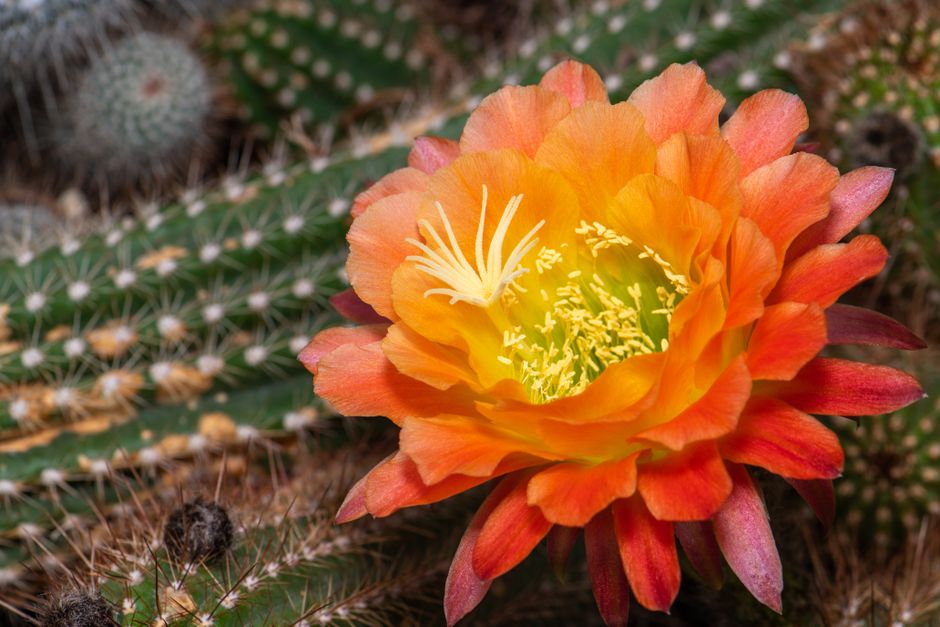
Photo by Skyler Ewing on Pexels
Lobivia lateritia Care Guide: Light, Watering, Soil & Essential Tips
Lobivia lateritia
🌍 Distribution
4 countries
Overview
Lobivia lateritia, a captivating member of the Cactaceae family, is a species renowned for its vibrant and often strikingly beautiful flowers. Originating from the high altitudes of the Andes in Bolivia and Argentina, this cactus is accustomed to harsh, arid environments, making it a resilient and rewarding plant for cultivation. Its name, "lateritia," Latin for "brick-red," hints at the common coloration of its spectacular blooms, although flowers can also appear in shades of orange, yellow, and occasionally pink.
Typically, Lobivia lateritia exhibits a solitary, spherical to short-columnar growth habit, though mature specimens may sometimes produce offsets, forming small clumps over time. The plant's body is usually a vibrant green, adorned with prominent ribs and spines that range from short and bristly to longer and more robust, depending on the specific form or cultivar. However, it is the magnificent, often large flowers, emerging from the apex of the plant in spring and summer, that truly make Lobivia lateritia a horticultural treasure. These diurnal flowers are known for their silken texture and intense coloration, often lasting for several days, a characteristic somewhat unusual for many cacti.
People are drawn to Lobivia lateritia for a multitude of reasons. Its relatively compact size makes it suitable for windowsills, rock gardens, and mixed succulent displays. The dramatic contrast between its spiny, green body and the delicate, brightly colored flowers is a visual spectacle. Furthermore, its general hardiness and ability to thrive under specific, yet achievable, care conditions contribute to its popularity.
This cactus is an excellent choice for a wide range of growers. While it can be forgiving of minor neglect, consistent attention to its specific needs will be rewarded with robust growth and prolific flowering. It is well-suited for beginner to intermediate plant enthusiasts who are willing to learn about proper cactus care, particularly regarding light and watering. Its need for a distinct dormant period and precise watering schedule means it suits someone who is attentive to seasonal changes in their plant's requirements, rather than an entirely hands-off approach. However, its drought tolerance during dormancy means it can also accommodate busy individuals during certain times of the year, provided its core needs are met during the active growing season.
Light Requirements
Optimal light conditions are paramount for the health and flowering of Lobivia lateritia. As a high-altitude desert dweller, this cactus thrives on intense sunlight.
Ideal Light Conditions: Lobivia lateritia requires full sun to very bright indirect light for at least 6-8 hours daily during its active growing season (spring and summer). In its natural habitat, it is exposed to unfiltered sunlight for most of the day. When grown indoors, this translates to placement in the brightest available location. Strong light is not only crucial for robust growth and compact form but is also the primary trigger for prolific flower production. Without sufficient light, the plant will struggle to produce its characteristic blooms.
Signs of Too Much Light: While Lobivia lateritia loves sun, extreme, unacclimated exposure, especially after a period of lower light, can cause stress.
- Reddening or Yellowing: The plant's body may develop a reddish or yellowish tint, particularly on the sun-exposed side. This is often a stress response, akin to a "sunburn."
- Scorching: In severe cases, particularly if moved abruptly from a shaded area to intense, unfiltered afternoon sun, patches of white or brown necrosis (dead tissue) can appear on the surface of the cactus. This indicates irreversible damage.
- Stunted Growth: While compact growth is desirable, a plant that receives too much harsh sun without adequate watering or acclimation might appear overly stressed and cease growing altogether.
Signs of Too Little Light: This is a more common issue for indoor Lobivia lateritia cultivation.
- Etiolation: The most apparent sign of insufficient light is etiolation. This manifests as stretched, pale green, and abnormally thin growth, often at the apex of the plant. The new growth attempts to "reach" for more light, resulting in a weakened, unnatural shape. Etiolated growth is permanent and cannot be reversed, though subsequent new growth under proper light will be healthy.
- Lack of Flowering: A Lobivia lateritia that receives too little light will rarely, if ever, produce flowers. The energy required for blooming is directly linked to the amount of light it photosynthesizes.
- Dull Coloration: The vibrant green of a healthy plant may appear dull or faded, and the spines might be less robust.
Window Placement Tips:
- South-Facing Window (Northern Hemisphere) / North-Facing Window (Southern Hemisphere): These are generally the best locations for Lobivia lateritia indoors, providing the most direct and prolonged sunlight throughout the day.
- East-Facing Window: Can be suitable, especially if the morning sun is intense and prolonged. However, it might not provide enough light for optimal flowering in all climates.
- West-Facing Window: Offers strong afternoon sun, which can be intense. While beneficial, plants might need a slight curtain or sheer blind during the hottest part of the summer afternoon to prevent scorching, especially if unacclimated.
- Grow Lights: For those with insufficient natural light, high-quality LED grow lights can supplement or entirely provide the necessary intensity. Ensure the light source is powerful enough and placed at an appropriate distance to avoid etiolation. Gradually acclimate the plant to new light conditions to prevent shock.
Watering Guide
Proper watering is arguably the most critical aspect of Lobivia lateritia care, as overwatering is the leading cause of demise for most cacti. The key is to mimic its natural desert environment, which involves periods of saturation followed by prolonged dryness.
Frequency:
- Growing Season (Spring and Summer): During its active growth period, typically from April to September (Northern Hemisphere), Lobivia lateritia should be watered regularly, but only after the soil has completely dried out. This typically translates to watering every 1 to 3 weeks, depending on ambient temperatures, humidity, pot size, and soil composition. A good rule of thumb is to wait a few extra days after the soil feels dry to the touch to ensure thorough dryness.
- Dormancy (Autumn and Winter): As temperatures drop and daylight hours shorten, Lobivia lateritia enters a crucial dormant period. During this time (roughly October to March in the Northern Hemisphere), watering should be drastically reduced or ceased entirely. If the plant is kept cool (below 15°C or 59°F), it may require no water at all for several months. If kept slightly warmer, a very light watering once every 4-6 weeks might be necessary to prevent extreme desiccation, but only if the soil is bone dry. The goal is to keep the plant cool and dry to encourage flowering in the spring.
Method (Top vs. Bottom Watering):
- Bottom Watering: This is often the preferred method for cacti. Place the pot in a tray or basin filled with 2-3 inches of water. Allow the pot to soak for 15-30 minutes, or until moisture wicks up to the top of the soil. This method encourages deeper root growth and ensures even saturation without disturbing the plant's body. Remove the pot and let it drain thoroughly.
- Top Watering: If top watering, pour water slowly and evenly over the soil surface until it drains freely from the bottom of the pot. Ensure that no water collects in the crown or on the body of the cactus, as this can lead to fungal infections or rot, especially in cooler conditions. Always discard any standing water in the saucer.
Signs of Overwatering: Overwatering is highly detrimental and often irreversible.
- Mushy Base/Stem: The most common and severe symptom. The lower part of the plant or its entire body becomes soft, squishy, and discolored (yellow, brown, or black). This indicates rot.
- Yellowing: The plant may turn an unhealthy yellow color, often accompanied by a soft texture.
- Swelling/Bursting: Cells can swell and burst from excessive water absorption, leading to visible scars or splitting on the plant's surface.
- Stunted Growth: Paradoxically, overwatering can also lead to stunted growth as roots become compromised and unable to absorb nutrients effectively.
- Foul Odor: Rotting tissue often emits an unpleasant, putrid smell.
Signs of Underwatering: While less immediately fatal, chronic underwatering will hinder growth and flowering.
- Wrinkling/Shriveling: The plant's body may appear shrunken, wrinkled, or shriveled, especially on the sides or between ribs, as it uses its stored water.
- Soft but Firm Texture: Unlike overwatering, an underwatered plant feels soft but still firm, not mushy.
- Stunted or No Growth: The plant will cease active growth and may appear dormant even during the growing season.
- Hardened Soil: The soil may become extremely hard and compacted, pulling away from the sides of the pot.
Soil & Potting
The right soil and pot are fundamental for the long-term health of Lobivia lateritia, primarily to ensure excellent drainage and aeration.
Ideal Soil Mix: Lobivia lateritia requires a soil mix that is extremely well-draining and porous, mimicking its natural rocky, gritty habitat. Standard potting soil retains too much moisture and will inevitably lead to root rot.
- A good starting point is a high-quality cactus and succulent potting mix. However, even these often benefit from further amendment.
- Aim for a mix that is 50-70% inorganic material. This can be achieved by blending:
- 1 part standard cactus/succulent mix
- 1-2 parts inorganic amendments such as perlite, pumice, coarse sand (horticultural grade, not play sand), or crushed granite.
- The goal is a gritty, loose substrate that allows water to drain rapidly and air to circulate freely around the roots. This prevents waterlogging and promotes a healthy root system.
Drainage Requirements: Excellent drainage is non-negotiable. The pot must have drainage holes at the bottom. A pot without drainage holes will trap water, creating a stagnant, anaerobic environment that is fatal for cacti. Never use a pot without drainage, or attempt to create a "drainage layer" of rocks at the bottom, as this is ineffective and can actually worsen drainage issues.
Pot Material Recommendations:
- Terracotta or Unglazed Clay Pots: These are highly recommended. Terracotta is porous, allowing moisture to evaporate through the pot walls. This helps the soil dry out more quickly and promotes better airflow to the roots, significantly reducing the risk of overwatering and root rot. They also add weight, which can be beneficial for larger specimens.
- Plastic Pots: Can be used, but they retain moisture for longer periods than terracotta. If using plastic, growers must be extra vigilant with watering frequency, ensuring the soil is completely dry before rewatering. Plastic pots are lighter and can be useful for very large plants that are difficult to move.
- Glazed Ceramic Pots: Similar to plastic, glazed ceramic pots do not allow for evaporation through their walls. They can be aesthetically pleasing but require the same careful watering approach as plastic pots.
Pot Size Guide:
- Slightly Larger Than Root Ball: When repotting, choose a pot that is only slightly larger than the plant's current root ball, typically about 1-2 inches (2.5-5 cm) wider in diameter than the plant's base.
- Avoid Oversized Pots: An excessively large pot will hold too much soil, which will retain too much moisture, increasing the risk of overwatering. Lobivia lateritia generally prefers to be somewhat pot-bound.
- Repotting Frequency: Repot Lobivia lateritia every 2-3 years, or when it becomes visibly root-bound (roots emerging from drainage holes, stunted growth). The best time to repot is at the beginning of the growing season (early spring) when the plant is emerging from dormancy. This allows the plant to quickly establish itself in its new container. When repotting, gently remove old soil, inspect roots for any signs of rot, and repot into fresh, dry cactus mix. Allow the plant to rest for a week or two before the first watering.
Temperature & Humidity
Understanding the ideal temperature and humidity ranges for Lobivia lateritia is crucial for replicating its natural habitat and ensuring its overall health and flowering potential.
Ideal Temperature Ranges:
- Growing Season (Spring and Summer): During its active growth phase, Lobivia lateritia thrives in warm temperatures. The ideal range is between 20°C and 30°C (68°F and 86°F). It can tolerate higher temperatures, even up to 35°C (95°F), provided there is good air circulation and appropriate watering.
- Dormancy (Autumn and Winter): A distinct cool, dry rest period is absolutely essential for Lobivia lateritia to prepare for flowering in the spring. During dormancy, temperatures should ideally drop to between 5°C and 15°C (41°F and 59°F). Some growers even expose them to slightly colder temperatures (around 0°C or 32°F) for short periods, provided the plant is kept completely dry. This temperature differential between growing and dormant periods signals to the plant to conserve energy and initiate bud formation.
Seasonal Considerations:
- Frost Protection: Lobivia lateritia is not frost-tolerant. While it can withstand cool temperatures during dormancy, prolonged exposure to freezing temperatures (below 0°C or 32°F) will cause irreversible damage and likely death. If grown outdoors in containers, they must be brought indoors or into a protected, unheated space (like a garage or cold frame) before the first frost.
- Temperature Fluctuations: In its natural habitat, Lobivia lateritia experiences significant diurnal temperature swings (warm days, cool nights). Mimicking this to some extent can be beneficial, but consistent extreme fluctuations are not necessary indoors.
- Air Circulation: Good air circulation is always beneficial, especially in warmer temperatures, to prevent fungal issues and help the soil dry out more efficiently.
How to Boost Humidity if Needed: Lobivia lateritia is a desert cactus and prefers low humidity. The ideal humidity range for this plant is typically between 20% and 40%. High humidity is generally detrimental, as it can encourage fungal diseases, root rot, and pest infestations. Therefore, there is no need to boost humidity for Lobivia lateritia; in fact, efforts should be made to ensure good airflow and lower humidity, particularly during cooler periods or if the plant is kept indoors. If your indoor environment is exceptionally humid, ensuring excellent air circulation (e.g., with a small fan) and using porous terracotta pots can help mitigate potential issues.
Fertilizing
Fertilizing Lobivia lateritia provides essential nutrients to support healthy growth and robust flowering, but it must be done judiciously and only during its active growth period.
Type of Fertilizer:
- Cacti and succulents generally benefit from fertilizers that are low in nitrogen (N) and higher in phosphorus (P) and potassium (K). Nitrogen promotes lush leafy growth, which is not ideal for cacti and can lead to soft, susceptible tissue. Phosphorus is vital for flowering and root development, while potassium supports overall plant health and disease resistance.
- Look for a fertilizer with an N-P-K ratio such as 5-10-10, 2-7-7, or similar formulations specifically labeled for cacti and succulents. A balanced fertilizer (e.g., 10-10-10) can also be used, but it should be diluted more significantly.
- Many growers prefer liquid fertilizers as they are easy to dilute and apply. Ensure the fertilizer also contains essential micronutrients.
Frequency:
- During the active growing season (spring and summer), Lobivia lateritia can be fertilized every 2 to 4 weeks.
- Always dilute the fertilizer to half or even quarter strength of the manufacturer's recommendations. Cacti are sensitive to over-fertilization, which can lead to salt buildup in the soil and chemical burns to the roots.
- It is crucial to apply fertilizer only to moist soil, never to dry soil, as this can burn the roots. Water the plant thoroughly the day before fertilizing.
Growing Season vs. Dormancy:
- Growing Season (Spring and Summer): This is the only period when Lobivia lateritia should receive fertilizer. Begin fertilizing in early spring as new growth appears and continue through late summer.
- Dormancy (Autumn and Winter): Do not fertilize Lobivia lateritia during its dormant period. Fertilizing during dormancy can disrupt the plant's natural cycle, lead to weak or etiolated growth, and contribute to root damage due to nutrient buildup when the plant is not actively absorbing them. Cease fertilization completely by late summer or early autumn as temperatures begin to drop and daylight hours shorten, signaling the plant to prepare for its winter rest.
Common Problems
Even with diligent care, Lobivia lateritia can encounter a few common issues. Recognizing the symptoms, understanding the causes, and implementing timely solutions are key to maintaining a healthy plant.
1. Etiolation (Stretching)
- Symptoms: New growth appears abnormally elongated, pale green, thin, and weak, often with smaller, fewer spines. The plant looks "stretched out" or "leggy."
- Causes: Insufficient light is the sole cause of etiolation. When a cactus does not receive enough light, it desperately tries to grow taller to reach a light source, resulting in weak, distorted growth.
- Solutions:
- Increase Light: Immediately move the plant to a brighter location, ideally a south-facing window (Northern Hemisphere) or under a strong grow light.
- Acclimation: If moving from very low light to intense sun, do so gradually over several days to weeks to prevent scorching.
- Pruning (Optional): Etiolated growth is permanent and will not revert to a healthy, compact form. While it doesn't harm the plant directly, it is unsightly. Some growers choose to cut off the etiolated top portion to encourage new, healthy growth from the base or to propagate the healthy tip (if possible).
2. Root Rot
- Symptoms: The base of the plant becomes soft, mushy, and discolored (yellow, brown, or black). The plant may lean, collapse, or appear generally unhealthy and waterlogged. A foul odor might be present.
- Causes: Overwatering is the primary cause, especially when combined with poorly draining soil, a pot without drainage holes, or high humidity/cool temperatures during dormancy. Excessive moisture suffocates roots, leading to decay.
- Solutions:
- Immediate Action: Unpot the plant immediately.
- Inspect and Trim: Gently remove all soil and inspect the roots. Cut away any soft, black, or mushy roots with a sterile knife or shears until only healthy, firm, white roots remain. If the rot has spread into the main stem, cut away all affected tissue until only clean, healthy plant material is visible.
- Callus: Allow the cut surfaces to air dry and callus over for several days to a week in a dry, shaded area.
- Repot: Repot into fresh, dry, well-draining cactus mix in a clean pot with drainage holes. Do not water for at least a week (or longer if extensive root trimming was done) to allow the plant to recover and new roots to form.
- Adjust Watering: Re-evaluate your watering schedule and soil mix to prevent recurrence.
3. Pests (Mealybugs & Spider Mites)
- Symptoms:
- Mealybugs: Small, white, cottony masses found in crevices, on the undersides of ribs, or around the base of the plant. They suck sap, leading to stunted growth, yellowing, and a sticky residue (honeydew).
- Spider Mites: Tiny red or brown mites, often difficult to see with the naked eye. Fine webbing may be visible, particularly between spines or on new growth. Damage appears as tiny yellow stippling or discoloration on the plant's surface.
- Causes:
- Mealybugs: Often introduced on new plants, can thrive in humid or overwatered conditions.
- Spider Mites: Common in hot, dry, and stagnant conditions.
- Solutions:
- Isolation: Immediately isolate the infested plant to prevent spread.
- Manual Removal: For mealybugs, dab them directly with a cotton swab dipped in rubbing alcohol (70% isopropyl alcohol). For spider mites, a strong spray of water can dislodge them.
- Insecticidal Soap/Neem Oil: Apply an insecticidal soap or neem oil solution, ensuring thorough coverage. Repeat treatments every 7-10 days for several weeks to break the pest life cycle.
- Systemic Insecticides: For severe infestations, a systemic insecticide can be used as a last resort, following product instructions carefully.
- Prevention: Inspect new plants thoroughly before introducing them to your collection. Ensure good air circulation and appropriate humidity levels.
4. Lack of Flowering
- Symptoms: The plant appears healthy and grows well, but consistently fails to produce flower buds during the spring and summer.
- Causes:
- Insufficient Light: The most common reason. Lobivia lateritia needs intense sunlight to produce the energy required for flowering.
- Lack of Winter Dormancy: Without a cool, dry rest period in winter, the plant's internal clock may not trigger bud formation.
- Improper Fertilization: Too much nitrogen or insufficient phosphorus can inhibit flowering.
- Immaturity: Very young plants may not be mature enough to flower.
- Solutions:
- Optimize Light: Ensure the plant receives at least 6-8 hours of direct, bright sunlight daily during the growing season.
- Provide Winter Rest: Crucially, give the plant a cool (5-15°C / 41-59°F) and dry dormant period for 3-4 months during winter. Cease watering almost entirely.
- Adjust Fertilization: Use a low-nitrogen, high-phosphorus fertilizer during the growing season, diluted to half strength.
- Patience: If the plant is young, simply wait for it to reach maturity.
Frequently Asked Questions
Q: How often should I repot Lobivia lateritia?
Lobivia lateritia typically benefits from repotting every 2-3 years, or when it becomes root-bound, indicated by roots emerging from drainage holes or stunted growth. The best time to repot is in early spring as the plant emerges from dormancy, allowing it to quickly establish in its new, slightly larger container with fresh, well-draining soil.
Q: Can Lobivia lateritia tolerate frost?
No, Lobivia lateritia is not frost-tolerant. While it requires a cool, dry dormant period, temperatures below 0°C (32°F) will cause severe damage or death. Always bring your plant indoors or provide frost protection if temperatures are expected to drop to freezing.
Q: Why isn't my Lobivia lateritia flowering?
The most common reasons for a lack of flowering are insufficient light and the absence of a cool, dry winter dormancy period. Ensure the plant receives abundant direct sunlight (6-8 hours daily) during its growing season and experiences temperatures between 5-15°C (41-59°F) with minimal watering during winter.
Q: What's the best way to propagate Lobivia lateritia?
Lobivia lateritia can be propagated from seeds or, more commonly, from offsets (pups) if the plant produces them. Carefully remove offsets from the mother plant, allow the cut end to callus for several days, and then plant in dry, well-draining cactus mix. Water sparingly only after new roots have formed.