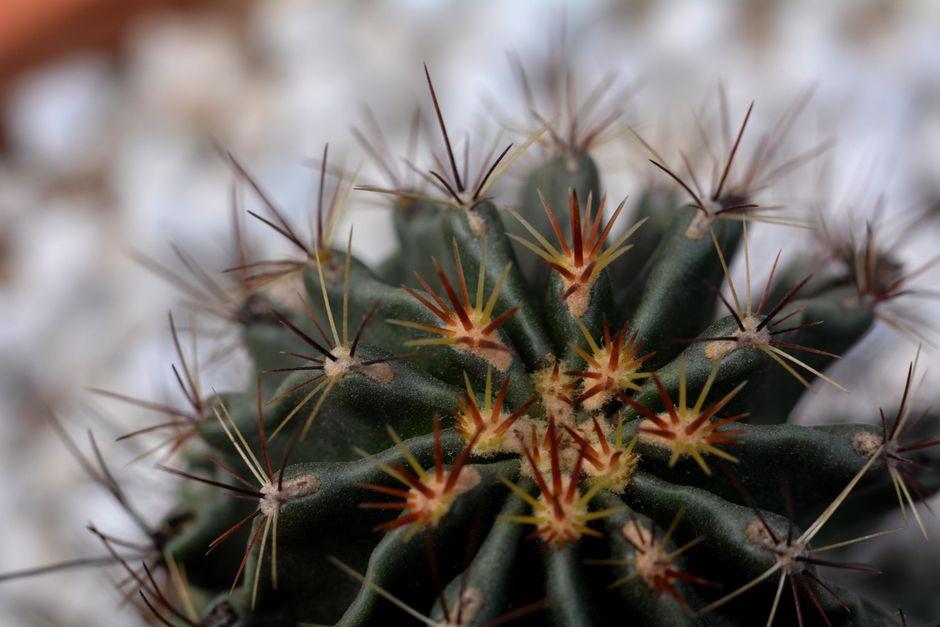
Photo by AMOL NAKVE on Pexels
Lobivia tegeleriana Care Guide: Light, Watering, Soil & Essential Tips
Lobivia tegeleriana
🌍 Distribution
2 countries
Overview
Lobivia tegeleriana is a captivating species of cactus belonging to the Cactaceae family, highly prized by enthusiasts for its striking beauty and relatively straightforward care requirements. Native to the high-altitude regions of the Andes, specifically Peru and Bolivia, this globular to slightly columnar cactus is accustomed to harsh, rocky environments. Its natural habitat, often above 3,000 meters (9,800 feet) elevation, contributes to its resilience and preference for specific growing conditions, including strong light and cool, dry winters.
What makes Lobivia tegeleriana particularly special is its spectacular floral display. While the body of the cactus itself is attractive, often featuring prominent ribs and robust spines that can range in color from golden to dark brown, it is the flowers that truly steal the show. These blooms are typically large, funnel-shaped, and come in an astonishing array of vibrant colors, including brilliant reds, oranges, pinks, yellows, and occasionally bicolors. They often emerge in late spring to summer, lasting only a day or two but opening sequentially, providing a prolonged period of interest. The contrast between the rugged cactus body and its delicate, intensely colored flowers is a primary reason for its widespread appeal.
People love Lobivia tegeleriana not just for its visual charm but also for the rewarding experience of cultivating a plant that produces such magnificent blooms. Its compact size makes it suitable for windowsills, small garden spaces, or mixed succulent arrangements. Furthermore, its adaptability to cooler temperatures during dormancy, provided it remains dry, makes it a more forgiving cactus for growers in temperate climates compared to some tropical species.
This cactus is best suited for intermediate growers who have some experience with succulents or cacti, but it can also be a rewarding plant for attentive beginners. While it tolerates a degree of neglect, especially regarding under-watering, it truly thrives and flowers profusely when its specific needs for light, watering, and dormancy are met. It appeals to individuals who enjoy the process of observing seasonal changes in their plants and are willing to provide distinct care routines throughout the year. It is less suitable for those seeking a completely hands-off plant that requires no seasonal adjustments.
Light Requirements
Lobivia tegeleriana is a sun-loving cactus that originates from high-altitude environments, and as such, it demands abundant light to thrive and produce its magnificent flowers. The ideal light condition for this species is full sun to very bright indirect light for at least 6-8 hours daily. Strong light is absolutely crucial for robust growth, dense spine formation, and, most importantly, for initiating and sustaining flowering. Without adequate light, the plant will struggle to bloom, and its overall health will decline.
Signs of too much light, though rare for a Lobivia unless introduced abruptly to intense sun, can include sunburn. This manifests as white, brown, or sometimes black scorched patches on the plant's surface, which may eventually scab over. The affected tissue will not recover its original appearance. If sunburn occurs, it typically means the plant was moved too quickly from a lower light environment to direct, unfiltered sunlight.
Conversely, signs of too little light are much more common and detrimental. The most evident symptom is etiolation, where the plant begins to stretch, becoming pale green, elongated, and weak, often with sparse and underdeveloped spines. This stretching is the plant's attempt to reach for more light. Etiolated growth is permanent and will not revert to its compact form even if light conditions improve; new growth, however, will be normal. Inadequate light will also severely inhibit or prevent flowering, leaving the plant healthy but bloom-less.
For indoor cultivation, a south-facing window (in the Northern Hemisphere) or a north-facing window (in the Southern Hemisphere) is generally the best placement, providing the most intense and prolonged direct sunlight. East or west-facing windows can also work, but an east-facing window offers gentler morning sun, while a west-facing window provides harsher afternoon sun which might require some sheer curtain protection during peak summer hours, especially if the plant has not been gradually acclimated. During winter dormancy, while the plant still benefits from bright light, the intensity is less critical than during the active growing season. Supplemental grow lights can be highly beneficial, especially in regions with short, dark winters, to prevent etiolation and promote vigorous spring growth.
Watering Guide
Proper watering is paramount for the health and longevity of Lobivia tegeleriana, and it varies significantly with the seasons. As a desert-adapted plant, it is far more tolerant of under-watering than overwatering, which is a common cause of demise for cacti. The fundamental rule is to allow the soil to dry out completely between waterings.
During the active growing season, which typically spans from late spring through early autumn (approximately April to September in the Northern Hemisphere), Lobivia tegeleriana requires more frequent watering. During this period, growers should water thoroughly whenever the soil has been completely dry for several days. This might translate to a frequency of every 1-3 weeks, depending on environmental factors such as temperature, humidity, and pot material. A good indicator is to insert a finger or a wooden skewer into the soil; if it comes out dry, it's time to water.
The preferred watering method is thorough saturation. Both top and bottom watering have their merits. Top watering involves pouring water slowly over the soil surface until it drains freely from the pot's drainage holes. This method helps flush out accumulated salts. Bottom watering involves placing the pot in a tray of water, allowing the soil to absorb moisture from the drainage holes upwards until the topsoil becomes moist. This ensures even saturation and encourages root growth downwards. Regardless of the method, it is crucial to avoid getting water on the cactus body, especially in cooler or humid conditions, as this can promote fungal issues. Always ensure excess water drains away completely; never let the pot sit in standing water.
Signs of overwatering include a soft, mushy base, discolored spots (yellowing or browning), and a general decline in plant vigor. The most severe consequence is root rot, which can quickly lead to the plant's death. Conversely, signs of under-watering include the plant appearing shriveled, wrinkled, or dull in color, and feeling less firm to the touch. While Lobivia tegeleriana can recover from moderate under-watering, prolonged drought can lead to permanent damage or death.
Seasonal adjustments are critical. In spring and autumn, as temperatures fluctuate and growth slows, watering frequency should be reduced to every 3-4 weeks, ensuring the soil dries out thoroughly for longer periods. During winter dormancy (approximately October to March), when temperatures are cool and light levels are lower, Lobivia tegeleriana requires very little to no water. A monthly light misting or no water at all is often sufficient for plants kept in cool, dry conditions. Providing a dry, cool dormancy is essential for encouraging prolific flowering in the subsequent growing season.
Soil & Potting
The right soil and pot are fundamental to the health of Lobivia tegeleriana, primarily because they dictate drainage and aeration, which are crucial for preventing root rot. As a cactus, this plant requires an extremely well-draining, gritty soil mix that mimics its natural arid, rocky habitat.
The ideal soil mix for Lobivia tegeleriana should consist of a significant proportion of inorganic materials. A good starting point is a standard cactus and succulent potting mix, but this typically needs to be amended heavily. Growers should aim for a mix that is 50-70% inorganic material. Suitable inorganic amendments include perlite, pumice, coarse horticultural sand (not play sand), crushed granite, or akadama. A common effective blend might be equal parts commercial cactus mix, perlite/pumice, and coarse sand. This ensures that water drains rapidly and air can circulate freely around the roots, preventing waterlogging.
Drainage requirements cannot be overstressed. Any pot used for Lobivia tegeleriana must have at least one, preferably multiple, drainage holes at the bottom. Without adequate drainage, excess water will accumulate, leading to anaerobic conditions and inevitable root rot, even with a gritty soil mix.
Regarding pot material, terracotta or unglazed ceramic pots are highly recommended. These materials are porous, allowing air and moisture to pass through their walls, which promotes faster evaporation of excess water from the soil. This characteristic is particularly beneficial for cacti that are susceptible to overwatering. Plastic pots can be used, but they retain moisture for longer periods, necessitating more careful and less frequent watering. Glazed ceramic pots also retain more moisture than unglazed ones.
For pot size, Lobivia tegeleriana generally prefers to be slightly root-bound rather than in an overly large pot. A pot that is only slightly larger than the plant's root ball is ideal. This helps to prevent the soil from staying wet for too long, as the roots will quickly absorb available moisture. Overly large pots hold too much soil, which can retain moisture for extended periods, increasing the risk of root rot. When repotting, choose a pot that is only one size larger than the current one, typically allowing about 1-2 cm (0.5-1 inch) of space around the root ball. Repotting is generally done every 2-3 years, or when the plant has outgrown its container or the soil has become compacted and lost its drainage capabilities.
Temperature & Humidity
Lobivia tegeleriana is a resilient cactus that thrives within specific temperature ranges and prefers low to moderate humidity, reflecting its high-altitude origins. Understanding these environmental factors is key to successful cultivation and prolific flowering.
During the active growing season, from spring through early autumn, the ideal temperature range for Lobivia tegeleriana is between 20-30°C (68-86°F). Within this range, coupled with ample light and appropriate watering, the plant will exhibit vigorous growth and develop its stunning flowers. While it can tolerate brief periods of higher temperatures, especially if air circulation is good, prolonged exposure to extreme heat above 35°C (95°F) can cause stress and potentially lead to dormancy or cessation of growth.
Seasonal considerations are particularly important for Lobivia tegeleriana as it requires a distinct cool, dry dormancy period during winter to encourage flowering in the subsequent spring. During winter dormancy (typically late autumn to early spring), the ideal temperature range is significantly cooler, between 5-10°C (41-50°F). During this period, the plant should be kept dry, with little to no watering. Lobivia tegeleriana is notably cold-hardy for a cactus and can tolerate brief dips below freezing (e.g., -5°C / 23°F) if kept completely dry. However, prolonged exposure to freezing temperatures, especially if the soil is damp, will be fatal. Protecting the plant from frost is essential.
Regarding humidity, Lobivia tegeleriana prefers low to moderate levels, typically ranging from 30-50%. It is not a humidity-loving plant, and high humidity, particularly when combined with cool temperatures or poor air circulation, can increase the risk of fungal diseases and rot. In most indoor environments, ambient humidity is usually within an acceptable range.
Boosting humidity is generally not needed for this species and can often be detrimental. If the air in an indoor environment is exceptionally dry (e.g., below 20% due to heating systems), a pebble tray filled with water can be used near the plant, ensuring the pot itself does not sit directly in the water. However, focus should remain on providing good air circulation, which is often more beneficial than increasing humidity for cacti. Outdoor cultivation in suitable climates naturally provides the necessary air movement and appropriate humidity levels.
Fertilizing
Fertilizing Lobivia tegeleriana plays a supportive role in promoting strong growth and abundant flowering, but it must be done judiciously. Over-fertilization can be detrimental, leading to nutrient burn or excessive soft growth that is more susceptible to pests and diseases.
The type of fertilizer recommended for Lobivia tegeleriana is a low-nitrogen, high-potassium formula. Fertilizers specifically designed for cacti and succulents, or those with an N-P-K ratio such as 5-10-10 or 2-7-7, are ideal. Nitrogen promotes vegetative growth, and while some is necessary, too much can lead to weak, leggy growth rather than robust, compact form and prolific blooms. Phosphorus supports root development and overall plant health, while potassium is crucial for flower and fruit development, disease resistance, and general vigor.
During the active growing season, which typically runs from late spring through early autumn, Lobivia tegeleriana can benefit from regular feeding. The frequency should be every 2-4 weeks. It is crucial to dilute the fertilizer to half or even quarter strength of the manufacturer's recommendations. This prevents nutrient overload and chemical burn to the roots. Always apply fertilizer to moist soil, never to dry soil, as this can severely damage the roots.
Fertilizing practices must strictly adhere to the plant's seasonal cycle. During winter dormancy (late autumn to early spring), when the plant is not actively growing and is experiencing cooler temperatures and reduced watering, absolutely no fertilizer should be applied. Feeding during dormancy can disrupt the plant's natural resting period, potentially leading to root rot or other stress-related issues. Resuming fertilization should only occur once new growth is observed in spring and regular watering has commenced. A gentle, diluted feeding at the beginning of the growing season can help kickstart robust development.
Common Problems
Despite being relatively resilient, Lobivia tegeleriana can encounter a few common issues, often stemming from improper environmental conditions or pest infestations. Understanding these problems, their symptoms, causes, and solutions is vital for maintaining a healthy plant.
1. Root Rot
- Symptoms: The most common and severe problem. Symptoms include a soft, mushy base, discolored patches (yellow, brown, or black) on the lower part of the plant, a foul odor emanating from the soil, and wilting or collapse of the plant despite adequate watering.
- Causes: Primarily caused by overwatering, especially when combined with poor drainage, heavy soil, or insufficient air circulation around the roots. Keeping the plant wet during its winter dormancy is a frequent trigger.
- Solutions: Immediately remove the plant from its pot. Inspect the roots; cut away any soft, black, or foul-smelling sections using a sterile knife. Allow the cut surfaces to callus over in a dry, airy place for several days to a week. Repot into fresh, extremely well-draining soil in a clean pot with drainage holes. Adjust watering frequency to allow the soil to dry completely between waterings, and ensure proper seasonal adjustments.
2. Etiolation (Stretching)
- Symptoms: The plant appears elongated, pale green, and weak, often with sparse, underdeveloped spines. The new growth is noticeably narrower than the previous growth.
- Causes: Insufficient light. Lobivia tegeleriana requires strong, direct sunlight for compact, healthy growth. This often occurs when plants are kept indoors in low-light conditions or are moved to shadier spots.
- Solutions: Move the plant to a brighter location, ideally one with direct sun for several hours daily. If growing indoors, consider using supplemental grow lights. Unfortunately, etiolated growth will not revert to its original compact form, but new growth under improved light conditions will be healthy. The stretched portion can be unsightly, but the plant can continue to grow from it.
3. Spider Mites
- Symptoms: Tiny, reddish-brown specks on the plant's surface, often accompanied by fine webbing, particularly in spine crevices or on new growth. Leaves (if present, though rare for mature Lobivia) may yellow or show stippling. The plant may appear dusty or dull.
- Causes: Spider mites thrive in dry, warm conditions and can spread rapidly. Lack of air circulation can also contribute.
- Solutions: Isolate the affected plant immediately to prevent spread. Gently spray the plant with a strong stream of water to dislodge mites and webbing. For persistent infestations, treat with insecticidal soap, neem oil, or a horticultural oil, ensuring thorough coverage, especially on the underside of the plant and in crevices. Repeat treatments every 5-7 days for several weeks to break the mite life cycle. Increasing ambient humidity slightly (e.g., with a pebble tray) and ensuring good air circulation can help deter mites.
4. Sunburn
- Symptoms: White, yellow, brown, or black scorched patches appearing on the plant's surface. These areas may become hard and scabby over time. The affected tissue is permanently damaged.
- Causes: Sudden exposure to intense, direct sunlight, especially if the plant was previously in a lower light environment. This is common when moving indoor plants outdoors in spring without gradual acclimation.
- Solutions: Move the plant to a location with slightly less intense light, or provide temporary shade during the hottest parts of the day. When moving plants outdoors, gradually acclimate them to full sun over a period of 1-2 weeks, starting with partial shade and slowly increasing sun exposure. The damaged tissue will not heal, but the plant can continue to grow around it.
Frequently Asked Questions
Q: How often does Lobivia tegeleriana bloom?
Lobivia tegeleriana typically blooms from late spring through summer, often producing multiple flushes of flowers if provided with optimal conditions, including strong light and a proper winter dormancy. Each individual flower usually lasts only one to two days.
Q: Is Lobivia tegeleriana cold hardy?
Yes, Lobivia tegeleriana is relatively cold hardy for a cactus. If kept completely dry during winter dormancy, it can tolerate brief dips below freezing, down to approximately -5°C (23°F), but it is generally best to protect it from prolonged frost and keep it above 5°C (41°F).
Q: Why isn't my Lobivia tegeleriana flowering?
The most common reasons for a lack of flowering are insufficient light, an inadequate or absent winter dormancy period, incorrect fertilizer (too much nitrogen), or overwatering during the growing season. Ensure it receives full sun and a cool, dry rest in winter.
Q: How do I propagate Lobivia tegeleriana?
Lobivia tegeleriana can be propagated from offsets (pups) that grow at the base of the main plant, or from seeds. Offsets should be carefully removed, allowed to callus for a few days, and then planted in well-draining cactus soil.